Reed Creek has always been part of Wythe County’s story — winding past pastures, rail lines, old mills, and quiet stretches of timber — but now it has something it’s never had before: a fully established public blueway.
The Reed Creek Blueway, running from Wytheville to Max Meadows, is the county’s newest outdoor asset and one of the most relaxed, scenic paddling routes in Southwest Virginia. With two official access points — Kents Lane Portage Park in Wytheville and Millers Creek Portage Park in Max Meadows — the blueway gives locals and visitors a legal, well-maintained way to get on the water without worrying about trespassing or makeshift put-ins.
The county secured a $100,000 Virginia Outdoors Foundation grant to build out the project, and both access sites now include parking, signage, picnic tables, and easy launch areas. It’s simple, quiet recreation — just a couple of parks, a beautiful creek, and several miles of float between them.
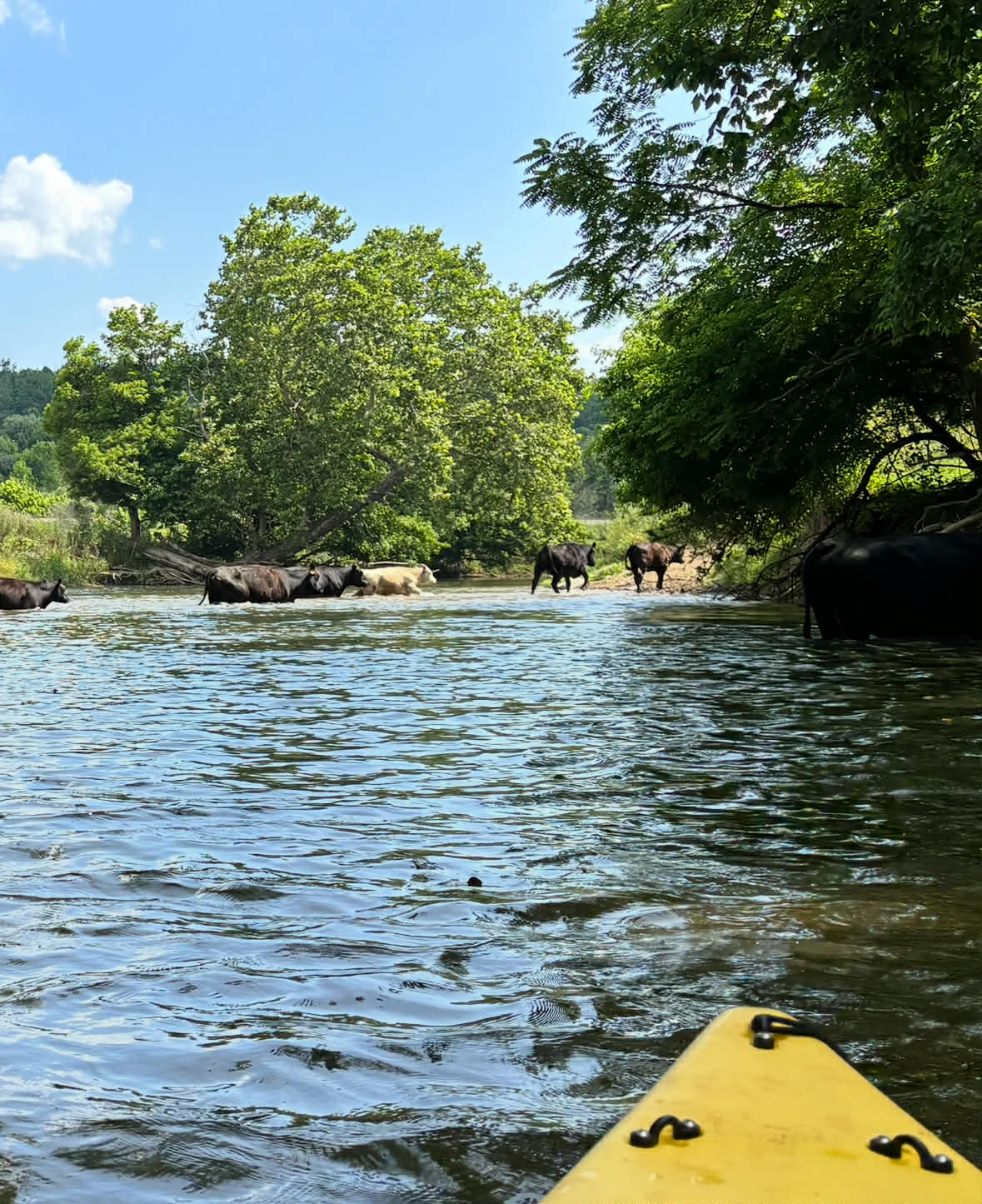
What makes it fun is the character of the route. Reed Creek isn’t a river that roars; it meanders. You’ll drift past rolling pastures where cattle occasionally wander down to the water for a drink or to cross to the other side — an only-in-Wythe-County moment if there ever was one. In a few stretches, the creek runs side-by-side with the Norfolk Southern rail line, and catching a train rolling through while you paddle adds its own kind of charm.
The scenery mixes open sky, farmland, and wooded bends, and the wildlife ranges from herons to kingfishers to the occasional deer splashing off the bank. It’s the kind of float where you’re not racing daylight; you’re just letting the current carry you.
The entire route sits between Wytheville, with its coffee shops and post-paddle lunch spots, and Max Meadows, with its quiet rural backdrop and easy access to I-81 and I-77. It’s a convenient stretch for beginners, families, and anyone wanting an easy afternoon on the water.
Reed Creek has served Wythe County for centuries — powering mills, shaping settlement patterns, and drawing farmers to its banks — but the blueway marks a new chapter. It invites people not just to look at the creek, but to experience it.
And as you drift under the trees, cattle watching you from the pasture, and a Norfolk Southern train humming beside you, it’s hard not to feel like the county built something genuinely special: a simple, honest way to enjoy the land we already love.