Bland County didn’t ask to be part of a constitutional mystery. It just wanted to exist—quietly tucked between the mountains, blessed with scenery, farmland, and the kind of peacefulness only 6,000 residents can properly appreciate. But on March 30, 1861, when the Virginia General Assembly created Bland County, they may have accidentally wandered into one of the strangest legal paradoxes in American history.
To understand why, we have to rewind to that awkward moment when Virginia was trying to decide whether it wanted to be in the Union, out of the Union, or somewhere in between. When Bland County was formed, nobody had fired on Fort Sumter yet. Technically speaking, the state was still part of the United States… for about two more weeks.
And then the wheels came off.
When Virginia voted to secede and joined the Confederacy, President Lincoln didn’t exactly accept that decision. Instead, he recognized a rival “Restored Government of Virginia” up in Wheeling. In the eyes of Washington, that government—not the Capitol in Richmond—was the real Virginia. This technicality was crucial, because the Constitution requires the legislature of an existing state to approve the creation of a new state. So when West Virginia showed up asking for statehood, Lincoln said, more or less, “Well, the Wheeling guys say it’s fine. Good enough for me.”
That’s how West Virginia became a state in 1863.
But now we hit the strange part.
If the Richmond government wasn’t legitimate—if Lincoln considered it a rogue operation—then any acts it passed shouldn’t count. That includes the act that created Bland County. By the logic used to justify West Virginia’s statehood, Bland County may not technically exist.
Of course, Bland County does exist. It has existed for 160+ years, and nobody in Washington is sending letters saying, “Please report to Wythe County; your time is up.” But the paradox is still there, lurking like a historical pothole on the backroads of constitutional law. Either the Wheeling government was the rightful Virginia legislature (which makes West Virginia legal), or the Richmond government was (which makes Bland County legal). Under the logic of the time, both can’t be true at the same moment.
Most historians shrug and chalk it up to “political necessity,” which is academic language for “we did what we had to do.” Lincoln needed West Virginia politically, militarily, and geographically. Bland County, on the other hand, wasn’t particularly controversial. Nobody was marching on Washington demanding answers about the new county nestled between Wythe, Tazewell, and Giles. So Washington just accepted Bland County as one of those pre-war technicalities and kept moving.
And that’s how we ended up with this delightful footnote: Bland County may be the only place in America that accidentally wandered into an 1860s logic loophole and lived to tell the tale.
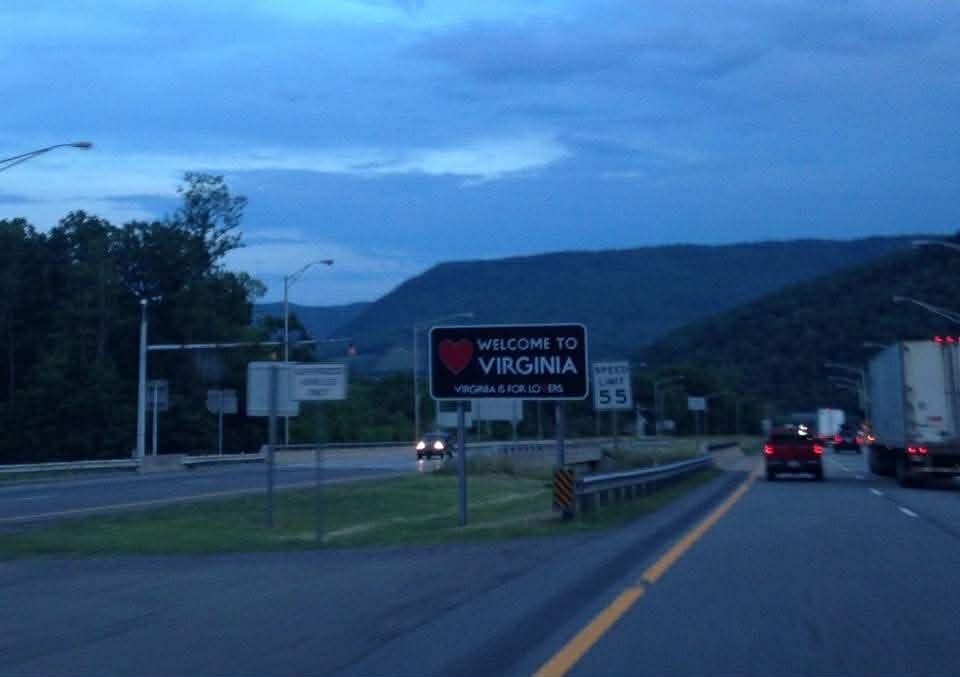
Should anyone lose sleep over this? Absolutely not. Bland County isn’t going anywhere. But it does make for a fun bit of trivia—something to bring up next time you’re driving I-77, passing Big Walker Mountain, and thinking about how complicated history can be.
Only in Southwest Virginia could a quiet mountain county end up in a constitutional tug-of-war and still remain… well… bland in the best possible way.
Share this article on Facebook: