By Jeremy Farley
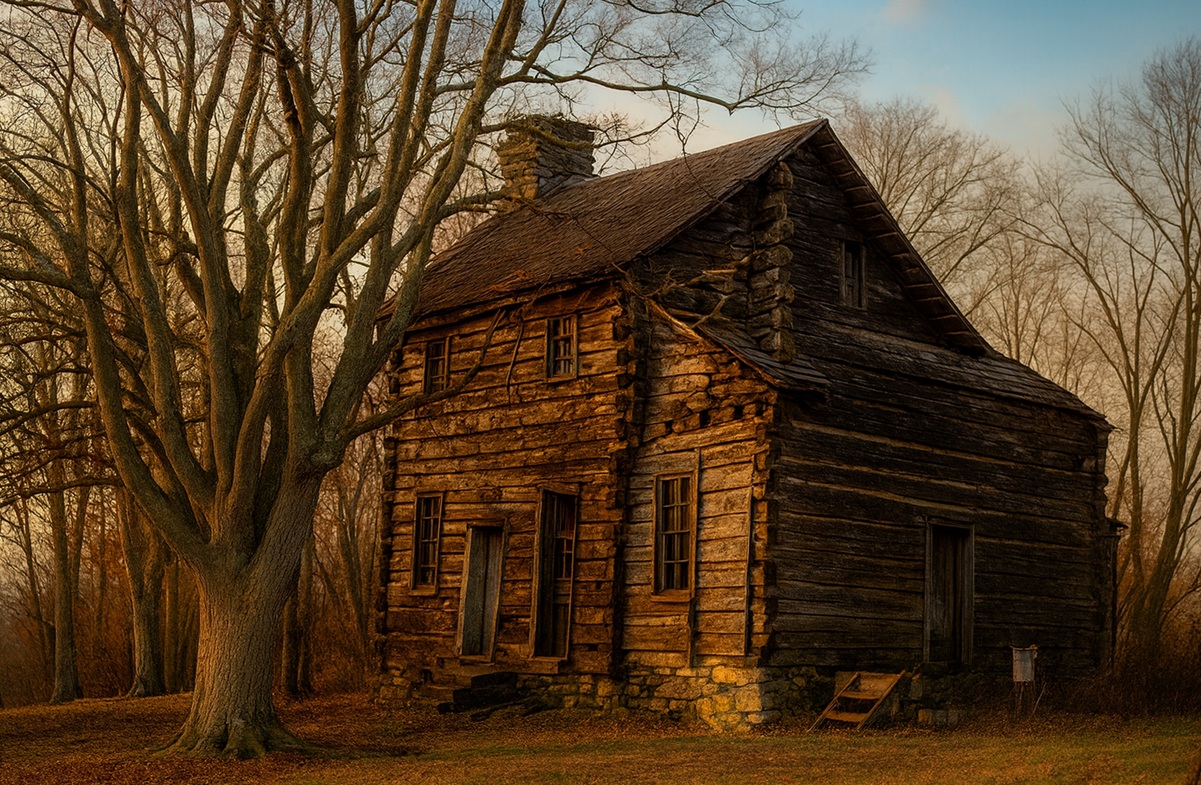
If you grew up in Max Meadows anytime prior to 1990, you probably remember the old McGavock log cabin—the weathered two-story house that sat just off the road like it was holding onto the 1700s with both hands. I was in kindergarten at Max Meadows Elementary, and every morning the school bus would rattle past it. I didn’t know a thing about history then, but even as a kid, that old log house looked like it belonged to another time.
Then one morning, the talk around school changed. Our teacher told us crews were taking the house apart—log by log—to ship it “across the ocean.” She said it was headed to a museum where it would be rebuilt for people in another country to see. For a room full of Wythe County kids, it was mesmerizing: the idea that this little piece of Max Meadows was bound for somewhere far away.
And then, as childhood memories do, the whole thing faded.
Recently, while talking with a woman who also grew up in Max Meadows, the cabin came up in conversation. Neither of us had seen it since the day it disappeared, and we wondered what it must look like, almost 35 years later, displayed in some Irish or British museum.
So I started digging.
What I found was nothing like what we were told as kids.
The Cabin Really Was Shipped Overseas — But It Never Made It Out of Storage
The first surprise came from a genealogical record maintained by the McGavock family. It confirms that the historic McGavock log house at Max Meadows was dismantled around 1990 and shipped to the Ulster American Folk Park in County Tyrone, Northern Ireland. That part of the story was true. But the same source mentions something else: as of 2018, the house still had not been reconstructed at the museum.
I wanted firsthand confirmation. That led me to the official website of the Northern Ireland Assembly, where I found a written parliamentary question submitted on February 11, 2025, by Member of the Legislative Assembly Michelle McIlveen regarding “the preservation and erection of the McGavock house at the Ulster American Folk Park.”
The answer, published on 25 March 2025, confirms the following facts:
- The McGavock house was indeed dismantled in Virginia and shipped to Northern Ireland in the 1980s or 90s.
- It has been in storage ever since arriving at the Ulster American Folk Park.
- It was never reconstructed because of the extensive conservation work required and concerns about how the delicate logs would fare in Northern Ireland’s damp climate.
The museum’s leadership also stated that the cabin is now being considered as an indoor centerpiece in a future redevelopment funded through the Mid South West Regional Growth Deal.
So the story is real — just not the story we were told.
The cabin made it across the Atlantic.
But it never made it out of the warehouse.
Why the Cabin Matters More Than Most People Realize
The Max Meadows cabin didn’t belong to just any early settler family. It was part of the early homestead of James McGavock, one of the original signatories of the Fincastle Resolutions — the earliest public statement in the American colonies promising armed resistance to King George III.
It’s a structure tied directly to the early Revolutionary generation. And it’s sitting in a warehouse on the other side of the Atlantic.
Still Waiting for Answers
To try to confirm the cabin’s exact status today, I reached out directly to Miss Michelle McIlveen, Member of Legislative Assembly, who submitted the 2025 parliamentary question, and National Museums Northern Ireland, which oversees the Folk Park and its collections. As of the publication of this article, I have not yet received a response from either office. When they respond, I’ll update the story.
A Cabin That Left Wythe County — and Then Disappeared Into a Box
For a lot of us who grew up in Max Meadows, the cabin is more than old logs and chinking. It’s a memory. A landmark. A symbol of the earliest days of Wythe County — and of its ties to American independence.
Something about the story feels unfinished.
As the United States approaches its 250th anniversary in 2026, people across the country are revisiting the stories that helped shape our nation. It seems fitting that one of Wythe County’s oldest structures — a Revolutionary-era cabin with a transatlantic journey — might finally get the attention it deserves.
Maybe this long-stored Virginia house will one day be rebuilt in Northern Ireland as intended. Maybe it will come home. Maybe it will remain boxed up for another generation.
For now, what we know is the cabin we watched leave Max Meadows is still waiting. Not lost. Not forgotten. But not yet given the second life the world was promised. And for a kid who watched it disappear from a school bus window, that feels like a story worth finishing.
Share this article with your friends on Facebook!
Sign Up for Weekly Email Updates
(We won’t SPAM you, we hate it, too!)